
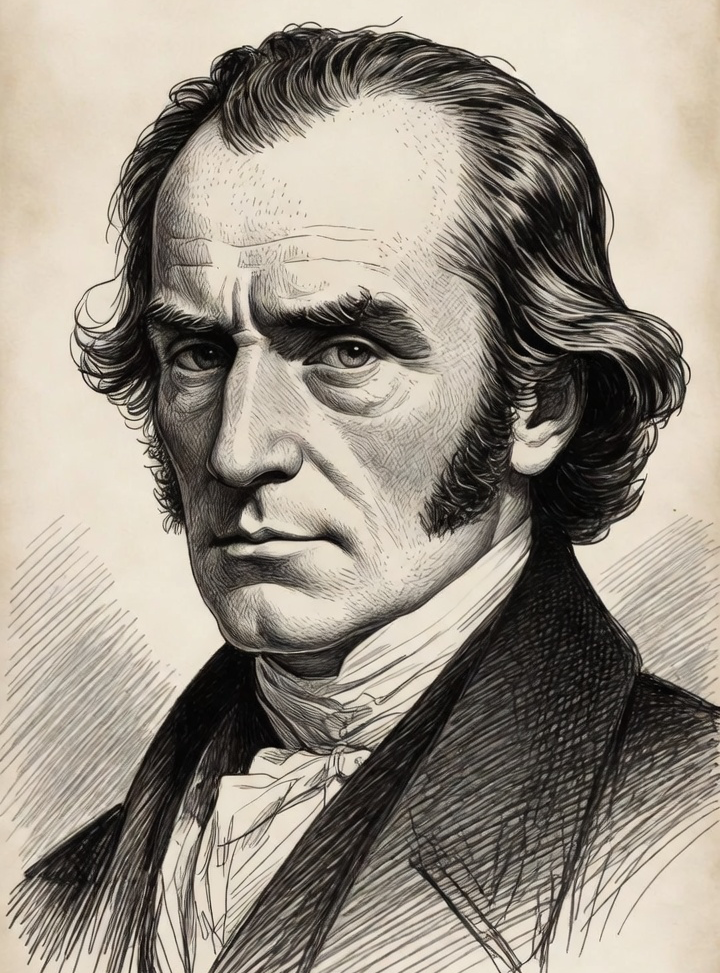
In the biting January cold of 1776, as colonial taverns hummed with uneasy talk of rebellion and loyalty to the Crown still tugged at many hearts, a slender 47-page pamphlet slipped into the world like a spark into dry tinder. Its author, an obscure English immigrant with a failed corset-maker’s past and a gift for uncompromising prose, was Thomas Paine. He had arrived in America only two years earlier, carrying little but letters of introduction from Benjamin Franklin and a fierce disdain for tyranny. Yet within weeks, his words would reshape the conscience of a people and help birth a nation.
Paine wrote Common Sense not for the learned salons of Philadelphia, but for the farmer, the blacksmith, the shopkeeper—for anyone who could read or listen as the pamphlet was read aloud by firelight. He rejected the flowery deference of the day. Instead, he spoke plainly: monarchy was not divine right but absurdity; kings were not fathers but parasites. “Society in every state is a blessing,” he declared, “but government even in its best state is but a necessary evil.” Hereditary rule? “Even brutes do not devour their young.” The colonies, he argued, were not children begging favors from a distant parent but a young giant ready to stand free.
The effect was electric. In a population of roughly 2.5 million, Common Sense sold tens to hundreds of thousands of copies in its first months—estimates vary from Paine’s own claim of 120,000 in three months to higher figures approaching half a million when counting reprints and European circulation. Proportionally, it remains one of the best-selling titles in American history. Multiple editions poured from presses across the colonies. It was passed hand to hand, debated in taverns, and smuggled into British-occupied zones. What newspapers and sermons had hinted at, Paine thundered outright: independence was not just possible—it was common sense.
George Washington, John Adams, and Thomas Jefferson took notice. The pamphlet cleared the mental fog that still clung to hopes of reconciliation. Six months later, the Declaration of Independence formalized what Paine had made thinkable. He had not merely argued for separation; he had named the emerging country “the United States of America” and painted a vision of republican government rooted in the people’s will.
Yet Paine’s work did not end with the first flush of enthusiasm. As the Revolutionary War dragged into its darkest winter, morale crumbled. Washington’s army was ragged, retreating, and near dissolution. On December 19, 1776, Paine published the first in a series of essays known as The American Crisis. Written by campfire light as he marched with the troops, it began with words that still stir the blood:
“These are the times that try men’s souls. The summer soldier and the sunshine patriot will, in this crisis, shrink from the service of their country; but he that stands it now, deserves the love and thanks of man and woman. Tyranny, like hell, is not easily conquered; yet we have this consolation with us, that the harder the conflict, the more glorious the triumph.”
Washington ordered the essay read aloud to his frostbitten men. Days later, they crossed the ice-choked Delaware and struck at Trenton. The victories that followed breathed new life into the cause. Paine would write thirteen Crisis papers in all, each one a rallying cry when hope faltered. He gave away the copyright, pouring any proceeds into the war effort. Paine guided the American conscience by refusing to flatter or soften. He spoke to the common man in language that felt like conversation—direct, vivid, moral. Where others saw subjects of the king, he saw citizens of a new order. Where fear whispered compromise, he demanded courage. His pamphlets did not create the desire for liberty, but they fanned it into a continental flame, turning scattered grievances into a shared revolutionary faith.
Thomas Paine was no saint. Later writings would alienate many, and his life would end in relative obscurity. But in the crucible years of 1776 and beyond, this self-taught son of a Quaker corset-maker gave ordinary colonists the words to believe they could govern themselves. In doing so, he reminded the world that ideas, plainly spoken and passionately held, can topple empires and found new ones. The revolution he helped ignite still echoes whenever people dare to declare their own common sense against tyranny.
-
 Quick View
 -
 Quick View
 -
 Quick View
 -
 Quick View