
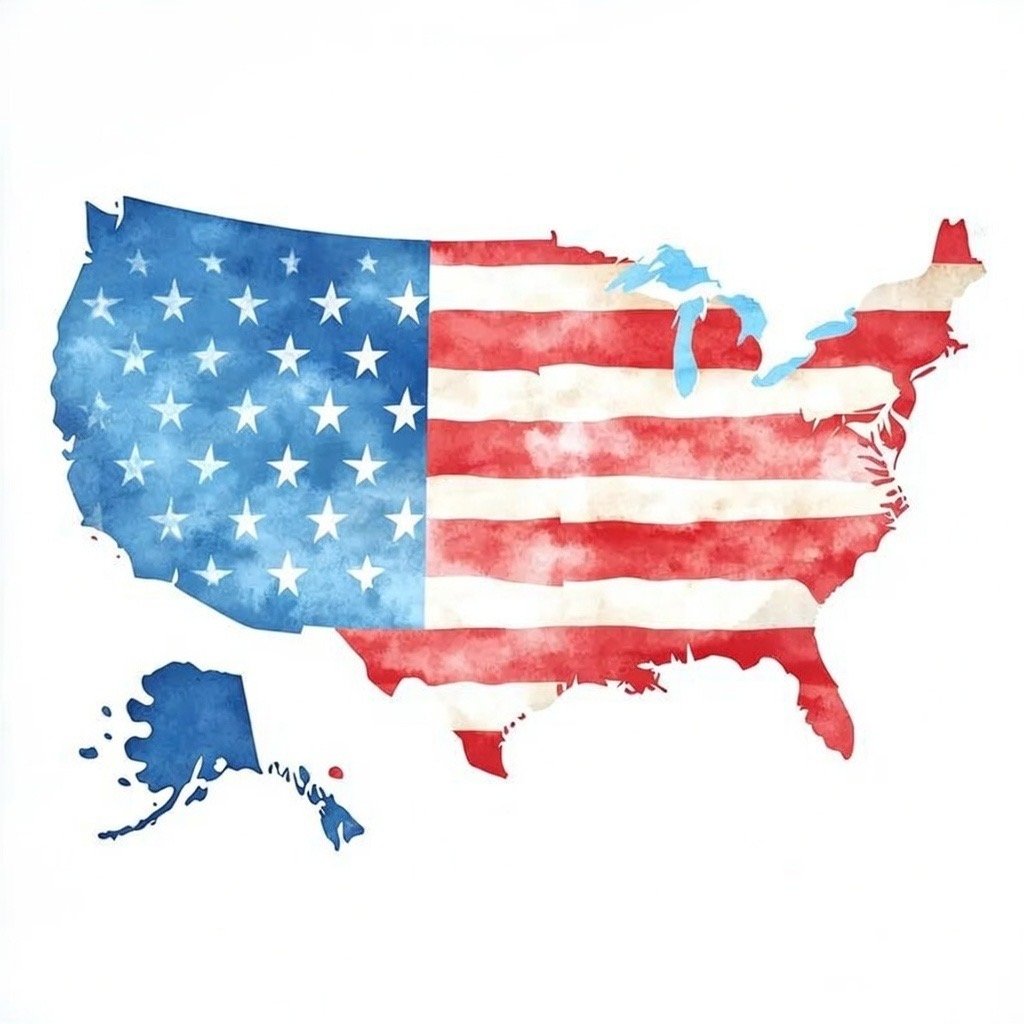
Buckle up folks, ‘cause American’s don’t just pay homage to Independence Day——We crank up the celebrations! We celebrate the 4th with star-spangled parades, enough hot dogs to feed a small nation for a year—150 million or more—and enough Coca-cola and Spirits to float a battleship! The 4th of July is revered across America as the day we declared “Independence” from England.
And talk about spooky coincidences—two of our most influential founding fathers, John Adams and Thomas Jefferson, died on Independence Day 1826 within hours of each other. Their deaths helped etch the date in the American consciousness. Five years later, James Monroe, our 5th President, a Revolutionary War hero who served in the Continental Army and was wounded seriously in battle, died on July 4th, 1831.
And yet, despite the seemingly supernatural timing of these events in relation to our July 4th celebrations, there have been arguments as to the exact date we should be celebrating—even by one of these founders.
The man who argued against celebrating Independence Day on July 4th, who grumbled the real date was July 2nd, and who refused to appear at July 4th events as a matter of principle, was none other than the aforementioned John Adams, our second President.
On July 3rd, 1776, John Adams was absolutely euphoric when he wrote his wife Abigail about the vote for independence the day before saying, “But the Day is past. The Second Day of July 1776 will be the most memorable Epocha, in the History of America. I am apt to believe that it will be celebrated, by succeeding Generations, as the great anniversary Festival.” He goes on to say, “It ought to be solemnized with Pomp and Parade, with Shews, Games, Sports, Guns, Bells, Bonfires and Illuminations from one End of this Continent to the other from this Time forward forever more.”
You could say, it’s a mystery how we got the date wrong. But, it’s not a mystery. The path to revolution and freedom was a messy, chaotic, and confusing affair; made worse by slow and often times inaccurate communication—a far cry from the instant X posts, DMs, or AI confirmations we have today to clear things up. The path to independence was a hot mess of debates, delays, and last-minute heroics.
So, how did we end up celebrating the wrong day, as John Adams insists we did?
Well now—you better hang on to your hat, ‘cause this is one wild ride!
On June 7th, 1776, during the Second Continental Congress, Richard Henry Lee of Virginia proposed that the American colonies break from England and form their own government. Lee’s proposal was in and of itself treason, punishable by death. And, any man who went along with Lee’s suggestion—defying the King of England—would have a death sentence hanging above his head.
While declaring independence from England had been debated for years, it had always been a theoretical practice. The difference now was that General George Washington was already leading an army against the British and had been doing so for more than a year, since the firing of “the shot heard ‘round the world,” on April 19th, 1775.
Citizens and politicians were having to choose sides. If General Washington were to have any hope of winning, he needed the support—the complete support—of the colonies. Knowing this, the proposal and the following debate heightened the irrevocable finality of such a decision. Once you “Declare Independence”—you can’t go back.
Realizing this, they did what all political bodies do; they decided-to-do-nothing…. and postponed the vote for a month, agreeing to reconvene on July 1st. In the meantime, they organized a committee, which included Thomas Jefferson, Benjamin Franklin, John Adams, Robert R. Livingston, and Roger Sherman, to write a “Declaration of Independence.”
When the committee of five met, John Adams wrote that, “Jefferson proposed to me to make the draft.” I said, “I will not. You should do it.”
“Oh! No,” said Jefferson. “Why will you not? You ought to do it.”
“I will not.” (Adams)
“Why?” (Jefferson)
“Reasons enough.” (Adams)
“What can be your reasons?” (Jefferson)
“Reason first, you are a Virginian, and a Virginian ought to appear at the head of this business. Reason second, I am obnoxious, suspected, and unpopular. You are very much otherwise. Reason third, you can write ten times better than I can.” (Adams)
“Well,” said Jefferson, “if you are decided, I will do as well as I can.”
“Very well,” replied Adams. “When you have drawn it up, we will have a meeting.
Fast forward to July 1st, 1776 when congress reconvened in Philadelphia—the mental and emotional strain was evident as the delegates decided to take an “unofficial” vote. Nine of the thirteen colonies supported declaring independence from England. South Carolina and Pennsylvania voted no. Delaware’s two attending delegates—one was absent—were deadlocked, one for and one against. New York delegates abstained, declaring that they didn’t have permission from the New York Convention to cast a vote. This “unofficial” vote was a far cry from the unanimous vote for independence many had hoped to gain during the intervening month.
But then something incredible happened. The next 24 hours would see history made in a most astounding manner.
The next day, July 2nd, the delegation from South Carolina, the youngest delegation of the group—boasting an average age between 29 and 30—seeing the winds blowing toward independence, decided to change their vote and align themselves with the majority. They were greatly influenced in this decision by Edward Rutledge who was the leader of the South Carolina delegation. There were now 10 colonies in the plus column for independence.
It is often said that America would have never gained her independence without three men; George Washington to lead the army, Benjamin Franklin to charm the French as allies, and Robert Morris who nearly single handily raised the money needed to keep Washington’s army fed and equipped.
Morris had a knack for separating others from their money for the war effort. Many times, in moments of crisis, Morris secured funding using his own name and credit. It is widely held, that without Morris’ money, fundraising ability, and financial ingenuity—we’d be eating “Fish n Chips” instead of “Hamburgers n Fries” for lunch every day. It has also been estimated that Morris gave as much as $1 million of his own money to finance Washington’s Yorktown campaign alone. There is no doubt, Morris was a patriot.
Despite his obvious patriotism, Robert Morris, along with John Dickinson, both representing Pennsylvania, voted against independence during the “unofficial” vote the day before. Their reasoning was, the time was not yet right to declare independence. With Morris’ and Dickinson’s votes, Pennsylvania delegates had voted 3 to 2 against independence “unofficially.” Realizing they were not in the majority, Morris and Dickinson would go on to do something entirely unexpected the following day.
On July 2nd, 1776— Robert Morris and John Dickinson absented themselves from the meeting. They stepped behind the famous rail of the Assembly Room, absent then from the ongoing proceedings and upcoming vote, allowing the remaining Pennsylvania delegates to vote 2 to 1 in favor of independence. Dickinson immediately headed home to organize local militias. Morris stuck around and would eventually sign the Declaration of Independence. The vote for independence now had 11 colonies in favor.
Yet, two colonies were still on the fence.
Arriving just as the meeting is starting, Caesar Rodney of Delaware, now takes center stage. The journey Rodney embarked on is remarkable given the slow pace of communication and transportation. It’s also amazing given the health of the man now standing center stage. Rodney suffered from bouts of asthma and a cancerous lesion that covered the left side of his face. Rodney had been absent on the day of the “unofficial” vote because, as a soldier-statesman, he was at home in Delaware trying to squash a British Loyalist uprising.
The two Delaware delegates at the convention, Thomas McKean and George Read, were deadlocked. McKean, realizing that Read was going to prevent Delaware from casting a vote for independence, dispatched a rider to travel the 80 miles to Rodney’s home with the urgent message to “get his butt to Philadelphia.” Getting the message at nearly midnight, Rodney—despite his health—immediately saddled a horse to ride through the night and a raging thunderstorm to dramatically enter the Assembly Room, muddy boots and all, just in time to cast a vote for independence.
“I met [Rodney] at the State-house door,” wrote McKean later, “in his boots and spurs, as the members were assembling.”
Rodney would write his brother later, “I arrived in Congress (tho detained by thunder and rain) time enough to give voice in the matter of independence…”
Rodney put Delaware firmly in the plus column. The vote for independence now had 12 colonies in favor.
New York would once again abstain, just as they did the day before. The delegates stated that they couldn’t cast a vote either way until they conferred with the New York Provincial Congress, a revolutionary provisional government, that had been established one year prior.
The score now stood at 12 in favor, 1 abstained, and none against. It wasn’t exactly unanimous. However, the motion carried, and with it a new nation was born. The date—July 2, 1776.
Seven days later, New York would approve the Declaration, making it unanimous.
Immediately after the vote, Congress began refining the language contained in the Declaration of Independence to the chagrin of Thomas Jefferson. One of the most important passages to be deleted dealt with slavery. The passage condemns the King of Great Britain with forcing “distant peoples….into slavery” and within the colonies “suppressing every (local) legislative attempt to prohibit or to restrain this execrable commerce.” Many historians believe that had this passage been left in the Declaration, slavery would have soon been abolished. Unfortunately, South Carolina and Georgia absolutely refused to sign any declaration that condemned the slave trade. For the sake of presenting a united front—a unanimous declaration—against the King, Congress struck the entire passage.
For two days Congress continued to work on the document and on July 4th the altered Declaration was formally adopted. Only two men signed the original document on July 4th, the President of Congress John Hancock and his secretary, Charles Thomson.
The document was then taken to a local printer, John Dunlap, who set the words to type and produced 200 copies. Dunlap affixed the date of July 4th to the top of the broadsides he printed, and the American public mistakenly assumed that was the day of the crucial vote for independence. These first copies became known as the Dunlap Broadsides. Riders and post carriers galloped out of Philadelphia carrying these broadsides to the 13 state assemblies and to General Washington’s army—where he had it read aloud to the troops in New York on July 9.
Three printed names (not signatures) were on the Dunlap Broadsides, John Hancock, President of Congress, Charles Thomson, who as Secretary attested to the document’s authenticity, and the printer’s name, John Dunlap.
On July 15, 1776—New York formally informs Congress that they concur with the vote for independence. Four days later, on July 19, Congress orders that a new ceremonial parchment copy—beautifully handwritten in large formal script on animal-skin parchment—be produced. Congress also orders that the document is to be titled, “The unanimous declaration of the thirteen United States of America,” to reflect the new reality that all 13 states were united in the cause against King George. The resolution also stated that every member of Congress was to sign the new “unanimous grandiose Engrossed Copy of the Declaration Of Independence.”
It wasn’t until August 2nd, 1776 that the majority of the delegates who voted for independence actually signed the “unanimous” grandiose Engrossed Copy of the Declaration.
By August 1776, most Americans considered July 4th the most important date in the newly formed nations history.
And, this is where things start to really get little murky.
For reasons that escape us, as there is no record of a discussion, Congress then decided not to correct the little white lie surrounding the date and even went so far as to back-date some official records to show that all 56 men had signed on July 4th, 1776.
Of course, this was not true. The men who were in Philadelphia on July 2nd and actually voted for independence, weren’t necessarily the same men who signed the Declaration at the August shindig. Some were already fighting in the war and others were working in their states to form new governments. Many signed when they could get around to it. One, we think, as late as 1781.
In fact, eight of the original delegates never signed the Declaration. These include John Alsop, George Clinton, John Dickinson, Charles Humphreys, Robert R. Livingston, John Rogers, Thomas Willing, and Henry Wisner.
Ever busy for the cause, Livingston, Clinton, and Wisner were attending to other matters away from Congress during the August signing.
Interestingly, Robert R. Livingston was on the Committee of Five that helped author the Declaration but as a delegate of New York had abstained from voting for independence. Years later, he would swear George Washington in as the first President of the United States. But, he never signed the Declaration.
Some of the men who voted on the measure in July had been replaced by new delegates for their state by the time of the August signing. Willing and Humphreys voted against the resolution for independence in July and were replaced in the Pennsylvania delegation before the August signing. Alsop, who had argued for reconciliation with Britain, resigned from Congress and refused to sign the document.
John Rogers had voted for the resolution but was no longer a delegate by August due to illness. Rogers is the only delegate to vote for independence and not sign the Declaration of Independence.
Dickinson, who was one of the most forceful voices against independence, arguing that the Declaration was premature, refused to sign the Declaration. However, he remained a delegate to Congress and fought in the Revolutionary War. It should be noted that Dickinson, on the crucial day of the vote, abstained from the vote which allowed Pennsylvania to vote in the affirmative for independence.
To add more confusion to the proceedings, Robert Morris – who along with Dickinson had abstained from voting in July—a month later—went ahead and signed the Declaration.
Two delegates, William Hooper and Samuel Chase, were away on other business when the Declaration was debated in July. Yet, they were back in Congress in August to sign the Declaration of Independence despite the fact that they never voted for independence.
Six delegates who were present in July didn’t make it to the August signing but signed later. These include; Lewis Morris, Thomas McKean, Elbridge Gerry, Oliver Wolcott, Richard Henry Lee and George Wythe. Remember, it was Richard Henry Lee who first proposed to Congress to break from England.
Eight men – new delegates – who joined Congress after July 2nd, were also allowed to sign the Declaration. The new members of Congress allowed to sign were; Matthew Thornton, William Williams, Benjamin Rush, George Clymer, James Smith, George Taylor, George Ross, and Charles Carroll of Carrollton. Of these, Matthew Thornton didn’t take a seat in Congress until November. Because there was no space for him to sign next to the other New Hampshire delegates, he placed his signature at the end of the document.
And lastly, there’s George Read—the only person to vote against independence—who went on to sign the Declaration of Independence anyway.
With all the confusion surrounding the signing of the Declaration of Independence, when they signed it, who was present and when, who voted in favor, and who didn’t—is it any wonder Congress decided to go with the July 4th date?
Maybe we should be celebrating July 2 as John Adams insisted. He was right you know—the real vote for independence happened on July 2, a date he thought would be remembered and celebrated.
He was off by two days.
But here’s the simple truth—a truth all these men knew—the fight for freedom didn’t end on July 2, or July 4, or August 2, or when the ink dried on that parchment. They fought for years to secure that victory and we fight for it every single day we wake up in this wild, flawed, breathtaking country.
So when the 4th rolls around—fire the grill up, grab a cold one, and watch the sky explode in red, white, and blue hues. But, remember this—every sizzling hot dog, every burst of fireworks, every laugh that echoes across a free backyard was paid for by the most audacious, imperfect, and glorious revolution in human history.
Raise that glass high, not just to the men who signed a death warrant in ink, but to the idea they bet their lives on—that ordinary people can govern themselves.
This party?
We earned it the hard way.
Cheers to the marvelous, messy miracle that lets us keep throwing it.
Now pass the lighter fluid.
Liberty’s looking bright tonight.
Let’s celebrate “every single day” we get to live free in this beautiful place we call America.
-
 Quick ViewSelect options
 -
 Quick ViewSelect options
 -
 Quick ViewSelect options
 -
 Quick ViewSelect options