
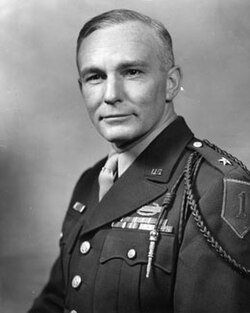
The Man Who Refused To Crawl on the Deadliest Beach in History
June 6, 1944. Omaha Beach. Hell on earth.
The sky screamed. Mortars—“Screaming Meemies”—howled down from the cliffs like demons unleashed. Machine-gun fire ripped the air into ribbons. The surf ran red. Bodies bobbed in the waves like broken dolls. Of the five beaches that day, Omaha was the butcher’s block—more than 10,000 Allied souls would bleed there before sunset. And in the middle of that slaughter, while thousands of men clawed the sand and prayed for it to swallow them, one colonel stood up. Bullets snapped past his helmet. Shrapnel hissed. Men screamed for their mothers. Colonel George A. Taylor—tall, unyielding, cigar clenched between his teeth—rose like judgment itself and bellowed across the carnage: “There are only two kinds of men on this beach—the dead… and those who are about to die!
Now let’s get the hell off this beach!” It wasn’t a suggestion. It was a thunderbolt dressed up as an order. A death sentence for fear. This is the story they never told you in the movie, “The Big Red One.” The raw, brutal truth of the man who turned a graveyard into a bridgehead.
Now let’s get the hell off this beach!” It wasn’t a suggestion. It was a thunderbolt dressed up as an order. A death sentence for fear. This is the story they never told you in the movie, “The Big Red One.” The raw, brutal truth of the man who turned a graveyard into a bridgehead.
George Arthur Taylor was born in 1899 in a dusty Illinois farmhouse, the son of a man who broke the earth with his hands. By the time he was a boy in Oklahoma, something hard had already settled in his bones—quiet steel, stubborn fire, the kind of grit that doesn’t bend. He joined the Army in 1917, fought through West Point, and never looked back. By the late 1930s he was a captain in the legendary 1st Infantry Division—the Big Red One—the outfit that had already carved its name into history. When World War II exploded, Taylor didn’t wait. He drilled his men until they bled. He planned. He prepared. And when the shooting started, he became something more.
North Africa, 1942. Taylor’s 16th Infantry Regiment smashed ashore at Arzew under fire and broke the Vichy lines in hours. Sicily, 1943—Gela beach. German panzers roared down while his men were still wet from the sea. Taylor held the line like a man possessed. But nothing—nothing—could prepare them for Omaha Beach. Except for one idea. A lesson Taylor witnessed on the beach landings in North Africa and Sicily. Inertia is death. Staying on the beach is death. The only hope for men on the beach, is to move and move quickly toward the objective. This fact – this idea haunted Taylor in the months leading up to D-Day. During this pre-invasion period, Taylor wrote in his journal that staying on the beach was certain death and penned the following, “In a landing operation, there are two classes of men that may be found on the beach, those who are already dead and those who are about to die.” The solution was simple- move! And move fast!
Dawn, June 6. The ramp drops. The world explodes. The 16th Infantry spilled into a wall of steel. Men died before their boots touched sand. The living were pinned against the seawall, bleeding, broken, waiting for the end. Radio antennas drew fire like lightning rods. The Germans on the cliffs above laughed—they thought the Americans were finished.
Then Taylor rose.
He walked through the storm of lead like it was rain. His uniform soaked with seawater and blood, his voice cutting through the roar like a bayonet: “Two kinds of men on this beach! The dead and those about to die! MOVE!”
Major Charles Tegtmeyer, the regimental surgeon, watched in disbelief while at the same time noticing the German’s were targeting Taylor because the radio men-who were following him-had their antennas extended. “For Christ’s sake, Colonel—get down! You’re drawing fire!”
Taylor glanced at him and grinned. He ordered the radio men to lower their antennas… then roared the same deadly truth again and kept walking.
Corporal Samuel Fuller—a future Hollywood legend, the man who would later write the movie script for “The Big Red One”—was running through a tornado of bullets looking for his colonel with an urgent message. He spotted a discarded Havana cigar butt in the sand and knew: Taylor’s here somewhere. When he reached him, Taylor shoved a fresh box of cigars into his hands with a grin carved from hell itself: “Enjoy ’em, Sammy. You earned them running over here.”
Then Taylor stood up again under the hail of fire and thundered: “There are two kinds of men out here! The dead! And those who are about to die! So let’s get the hell off this beach and at least die inland!” That was the moment the tide turned. One by one, then in a roaring wave, the men of the 16th rose. Privates. Sergeants. Lieutenants. They followed Colonel Taylor up the beach, through the barbed wire, across the minefields, up the treacherous shale cliffs, straight into the teeth of the German guns. Taylor was everywhere—shouting orders, dragging the wounded, kicking the terrified forward, pistol in one hand, pure will in the other. By midday, the impossible had happened. The 16th had cracked the German line. Machine-gun nests fell silent under grenades and bayonets. The bluffs were theirs. Omaha Beach—a slaughter pen just a few hours before—was now an American bridgehead. Hundreds of Taylor’s men lay dead or dying in the sand behind them. But they had done what no one on that beach believed possible in the early morning hours.
Colonel George A. Taylor earned the Distinguished Service Cross that day. He would fight on through Normandy’s hedgerows, the frozen horror of Hürtgen Forest, and into the heart of Germany—always the same man: gruff, relentless, unbreakable.
Taylor retired after the war and, with his DD-214 in hand, lived out the rest of his life in peace.
He died in 1969, but the legend never did. Because on the bloodiest beach in history, one man refused to crawl.
One man stood up.
One man reminded an entire army that sometimes the only way to live… is to move.
And the world has never been the same since.
This is the real story of the Big Red One.
This is the man who refused to die crawling on his belly.
What would you have done if you’d been on that beach?
-
 Uncategorized
Some Firsts Are Worth Keeping Forever
$32.98 Select options This product has multiple variants. The options may be chosen on the product page -
 Funny Tees
DEFUND THE H.O.A. – Anti HOA Tee
$27.98 Select options This product has multiple variants. The options may be chosen on the product page -
 Funny Tees
Don’t Tread On Me – Coiled Rattlesnake Patriot Since 1776
$27.98 Select options This product has multiple variants. The options may be chosen on the product page -
 "DYK" Products
Who Am I? Audie Murphy – Most Decorated Soldier
$32.98 Select options This product has multiple variants. The options may be chosen on the product page