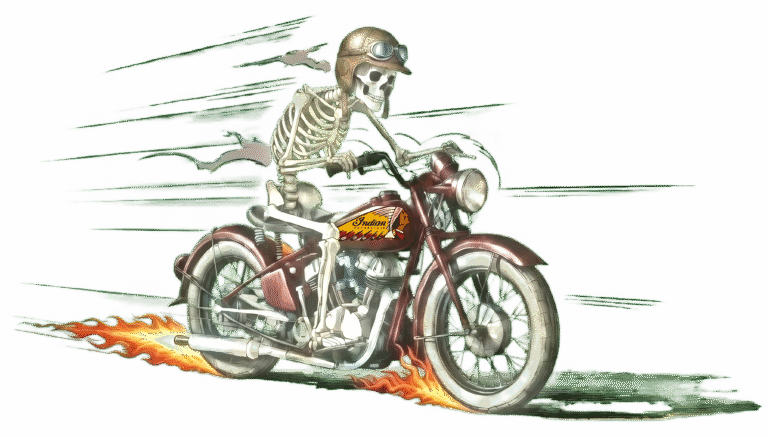
The quote that echoes through the leather-and-chrome cathedrals of biker lore—”You don’t stop riding because you’re old… You get old because you stopped riding”—is no mere bumper-sticker slogan. It is a sharp, philosophical blade, forged in the same fire as the engines that propel us down endless black ribbons of asphalt. Far from the product of some anonymous grease-stained poet, it stands as a deliberate, elegant transmutation: a motorcycle-specific reworking of the timeless axiom most often laid at the feet of George Bernard Shaw, the razor-witted Irish playwright and Nobel laureate. His original insight rings with classical clarity: “You don’t stop playing because you grow old; you grow old because you stop playing.” That aphorism, born in the early 20th century and carried across decades like a well-tuned carburetor, has been brilliantly repurposed across countless passions—sports, music, art—yet nowhere does it find fiercer, more poetic application than among those who ride. Bikers, those often underestimated philosophers of the road, recognized its profound truth and claimed it as their own. They stripped away the gentler abstractions of “playing” and replaced them with the visceral, high-stakes act of riding—a pursuit that demands vigilance, courage, mechanical intuition, and an unyielding refusal to surrender to entropy. In doing so, they elevated folk wisdom into something almost existential: a defiant manifesto against the slow surrender that age so often demands. This version has thundered through the culture for at least 15–20 years, passed hand-to-gloved-hand on club rides, tattoo parlors, and weathered bar tops—always presented as ancient, unattributed “biker wisdom,” never needing a byline because its power needs no signature. No single celebrity, no storied outlaw, no famous wrench-turner is credited with birthing the motorcycle variant. It simply emerged, collective and anonymous, from the shared soul of riders who understand that vitality is not measured in birthdays but in throttle twists. In the hands of intelligent bikers—those literary outlaws who read Kerouac between oil changes, quote Hunter S. Thompson over campfire beers, and recognize a good aphorism the way they spot a clean line through a curve—this saying becomes proof of their depth. It is not just clever; it is profound, a quiet rebellion against decay, a reminder that true age arrives not from the calendar, but from the moment one parks the bike for the last time and lets the road grow cold. So ride on, brothers and sisters. The quote isn’t just words—it’s armor. And the riders who live it are among the sharpest minds still turning wheels against the wind.